
Medical Officer vs Mine Doctor Salary SA
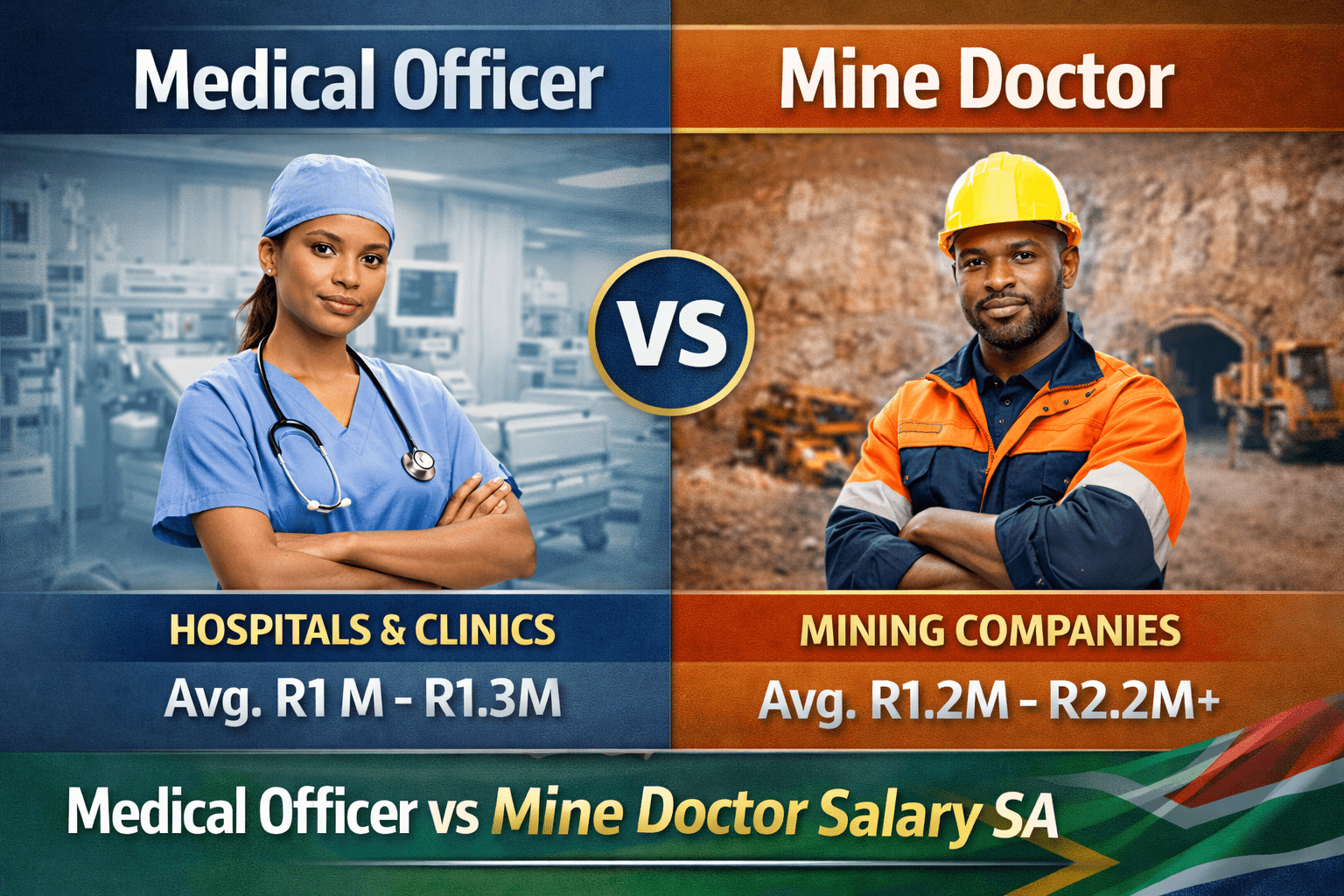
The Medical Officer vs Mine Doctor Salary SA comparison is one of the most useful topics for doctors who want to understand which career path offers better income, benefits, and long-term career growth. In South Africa, many doctors begin their journey in the public healthcare system, but later consider moving into occupational health roles in the mining sector because of the attractive salary packages and structured work environments. This makes salary comparison an important part of career planning for both newly qualified doctors and experienced practitioners.
Although both career paths require strong medical knowledge, professional registration, and the ability to make sound clinical decisions, they operate in very different environments. A public sector Medical Officer usually works in a government hospital or clinic, where the focus is on patient diagnosis, treatment, emergency response, clinical documentation, and teaching. An Occupational Mine Medical Officer, on the other hand, works within the mining industry and focuses more on employee health, workplace safety, medical surveillance, occupational disease prevention, and compliance with occupational health rules.
This guide explains the Medical Officer vs Mine Doctor Salary SA comparison in detail. It covers average salary ranges, benefits, work conditions, job responsibilities, training requirements, and long-term career opportunities. If you are trying to decide whether to stay in the public sector or move into the mining industry, this article will help you understand the major differences clearly.
What Is a Medical Officer vs Mine Doctor Salary SA?
A Medical Officer is a qualified doctor who works in a hospital, clinic, or other healthcare institution providing medical care to patients. In South Africa, Medical Officers are commonly employed by provincial Departments of Health and serve in regional hospitals, district hospitals, tertiary hospitals, and community healthcare settings. Their role is central to the healthcare system because they diagnose illnesses, prescribe treatment, request investigations, manage admissions, supervise junior staff, and participate in patient-centred care across different departments.
Medical Officers often work in units such as:
- General Medicine
- Emergency Medicine
- Surgery
- Neurosurgery
- Paediatrics
- Internal Medicine
- Obstetrics and Gynaecology
In many public hospitals, Medical Officers also play a role in training medical students, supervising interns, attending ward rounds, and contributing to hospital research or audit activities. Their jobs are often demanding because patient loads can be high, staff shortages are common, and hospitals may require night duty, weekend calls, and public holiday work.
If you are exploring current hospital opportunities, you can also read our related guides on Medical Officer Neurosurgery Jobs 2026 and Medical Officer Surgery Breast Unit Jobs 2026.
Medical Officer Salary in South Africa (Public Sector)
Understanding the Medical Officer salary vs Occupational Mine Medical Officer salary South Africa comparison starts with public sector salaries. Government doctors are generally paid according to the Occupational Specific Dispensation (OSD) structure, which is designed to provide consistent salary progression based on grade level and years of relevant experience. This means that Medical Officers in the public healthcare system usually have a predictable salary path.
Typical Medical Officer salary South Africa ranges include:
- Medical Officer Grade 1: R1,001,349 per year
- Medical Officer Grade 2: Approximately R1,142,553 per year
- Medical Officer Grade 3: Approximately R1,322,352 per year
These salaries are usually listed as all-inclusive packages. In practical terms, this means the package may include pension-related benefits, medical aid options, leave benefits, and other state employment advantages. On top of this, some Medical Officers may also qualify for additional compensation such as commuted overtime, rural allowances, scarce skills allowances, and other employment-related benefits depending on the post and location.
The government doctor salary South Africa path is attractive for doctors who want stable earnings, clear salary progression, and strong clinical exposure. However, many doctors also compare these salaries with mining-sector roles because the Mine Medical Officer salary South Africa can sometimes be significantly higher.
Applicants who want to work in public hospitals should make sure they are properly registered with the Health Professions Council of South Africa (HPCSA) and use the latest Z83 application form when applying for government vacancies.
Responsibilities of Medical Officers
The duties of a Medical Officer usually include a wide combination of clinical, administrative, and academic responsibilities. These responsibilities may vary from one hospital to another, but the core role remains focused on patient diagnosis, treatment, and clinical management.
- Patient examination and diagnosis
- Ordering and interpreting investigations
- Prescribing treatment and medications
- Supervising interns and junior doctors
- Participating in hospital ward rounds
- Completing clinical documentation
- Participating in research and academic activities
Medical Officers in tertiary hospitals often work under pressure and must handle both routine and urgent patient care. This type of work builds strong clinical competence, but it can also come with demanding schedules and emotionally intense hospital environments. That is one reason why some doctors later explore occupational health roles where the work structure may be different.
What Is an Occupational Mine Medical Officer?
An Occupational Mine Medical Officer is a doctor who works within the mining industry and focuses on occupational health, worker safety, workplace risk assessment, and the prevention of occupational disease. Instead of spending most of the day treating general hospital patients, these doctors work with mine employees and management teams to ensure workers are medically fit, workplace exposure is controlled, and health monitoring systems are functioning properly.
The Occupational Medical Officer salary South Africa topic gets strong interest because these jobs are often linked to larger corporate packages and more specialized workplace health responsibilities. Mining companies need medical officers to monitor the health of their workforce and to ensure compliance with workplace health and safety rules.
Mining doctors may work for major companies such as:
- Anglo American
- Implats
- South32
- Rio Tinto
- Sibanye-Stillwater
If you are more interested in mining opportunities, you can also read our guide to Mine Medical Officer Jobs 2026 South Africa.
Occupational Mine Medical Officer Salary in South Africa
The Occupational Mine Medical Officer salary South Africa range is often higher than the standard public sector Medical Officer package. This is mainly because mining companies operate in a profit-driven environment and often pay more to attract skilled professionals willing to work in remote areas, rotational systems, or highly regulated workplace environments.
Typical Mine Medical Officer salary South Africa ranges include:
- Entry-level Occupational Medical Officer: R1,200,000 – R1,500,000 per year
- Experienced Mine Medical Officer: R1,500,000 – R2,200,000 per year
- Senior Occupational Health Specialist: R2,500,000+ per year
In addition to the base package, the doctor salary in South Africa mining industry may also include housing allowances, performance bonuses, relocation assistance, pension contributions, company medical benefits, and structured leave arrangements. This is one reason why many doctors compare the Medical Officer salary vs Occupational Mine Medical Officer salary South Africa before deciding whether to remain in the hospital system.
While the mining sector can offer stronger salary packages, it is important to remember that these jobs require a different professional focus. Doctors in mining are expected to understand occupational health principles, workplace exposure risks, employee screening, injury management, and health surveillance systems.
Responsibilities of Occupational Mine Medical Officers
Occupational Mine Medical Officers focus more on worker health and workplace safety than general patient care. Their job is often less about managing large ward rounds and more about medical surveillance, compliance, and risk reduction in the occupational setting.
Common responsibilities include:
- Conducting employee medical examinations
- Monitoring occupational diseases
- Assessing workplace health risks
- Managing workplace injuries
- Implementing health surveillance programs
- Ensuring compliance with occupational health regulations
Mining doctors often work closely with safety officers, engineers, occupational health nurses, and corporate management to ensure safe working conditions. Doctors who want to understand workplace compliance in more detail can review South Africa’s Occupational Health and Safety resources.
Key Differences Between Medical Officer vs Mine Doctor Salary SA
| Category | Medical Officer (Hospital) | Occupational Mine Medical Officer |
|---|---|---|
| Primary Workplace | Hospitals and clinics | Mining companies |
| Main Focus | Patient treatment | Workplace health and safety |
| Typical Salary | R1,000,000 – R1,300,000 | R1,200,000 – R2,200,000+ |
| Working Hours | Shift work and overtime | Often structured schedules |
| Career Growth | Specialist training pathways | Corporate health leadership roles |
Average Doctor Salaries in South Africa by Sector
When comparing the Medical Officer salary vs Occupational Mine Medical Officer salary South Africa, it helps to place both roles next to other doctor salary categories. Different sectors reward doctors differently depending on the level of specialization, corporate structure, and the clinical or occupational demands of the role.
- Medical Officer Salary South Africa (Public Sector): R1,001,349 – R1,322,352 per year
- Occupational Mine Medical Officer Salary South Africa: R1,200,000 – R2,200,000+ per year
- Private Hospital Doctor Salary: Often higher depending on contract and experience
- Specialist Doctor Salary South Africa: Usually much higher depending on specialty and sector
This comparison shows why many doctors search for terms like Medical Officer salary South Africa, mine doctor salary South Africa, and occupational health doctor salary South Africa before making a career decision. The mining sector can offer higher pay, but the public sector still offers valuable clinical development and specialist pathways.
Work-Life Balance Comparison
One of the biggest differences in the Medical Officer salary vs Occupational Mine Medical Officer salary South Africa discussion is work-life balance. Hospital-based Medical Officers often work night shifts, emergency calls, weekend duty, and public holiday rosters. This can be intense, especially in understaffed public hospitals where patient demand remains high.
Hospital Medical Officers often work:
- Night shifts
- Weekend duties
- Public holiday shifts
- Emergency calls
Mine Medical Officers, by comparison, may work in more structured schedules depending on the company and mine site. Some positions use rotational systems, which can offer longer off-duty periods between work cycles. Others may involve on-site occupational clinics or corporate medical facilities with more predictable hours. This difference is one reason why some doctors are willing to trade hospital clinical intensity for occupational health work.
Training Requirements for Occupational Health Doctors
Doctors who want to transition into occupational health often complete additional study in occupational medicine, public health, or workplace safety. Although a medical degree and valid registration are essential, extra qualifications can improve employability in the mining industry and support long-term growth into senior occupational health leadership roles.
Common qualifications include:
- Diploma in Occupational Medicine
- Master of Public Health
- Occupational Health certifications
These qualifications help doctors specialize in workplace health and safety, which is highly valued in mining companies. Practitioners should also keep their professional registration current through the HPCSA.
Mine Medical Officer Jobs in South Africa
Doctors interested in higher-paying occupational roles often search for Mine Medical Officer jobs South Africa because these positions combine clinical judgment with corporate workplace health responsibilities. In the mining sector, doctors are often involved in pre-employment assessments, ongoing employee health monitoring, fitness-to-work evaluations, occupational disease prevention, and regulatory compliance.
You can explore current opportunities in our guide:
Mine Medical Officer Jobs 2026 South Africa – High Salary Medical Positions
These roles are especially attractive to doctors who want to move away from high-volume hospital care and into a more structured occupational setting. The mining company doctor salary path can be appealing, but it requires real interest in workplace medicine and employee health systems.
Which Career Path Is Better?
There is no single answer to whether hospital or mining work is better, because the decision depends on individual career goals. The Medical Officer salary vs Occupational Mine Medical Officer salary South Africa comparison is important, but salary alone should not decide the issue. Doctors should also think about clinical interests, desired lifestyle, long-term career plans, and the type of work environment they enjoy.
Doctors who enjoy:
- Patient care
- Hospital environments
- Teaching and academic medicine
- Specialist training pathways
may prefer the traditional Medical Officer route in the public sector.
Doctors who prefer:
- Higher salaries
- Corporate healthcare roles
- Workplace health management
- Structured or rotational schedules
may find mining-sector occupational roles more appealing.
Future Demand for Doctors in Both Sectors
Both the public healthcare system and the mining industry continue to need qualified doctors. South Africa’s public hospitals rely on Medical Officers to manage patient loads, support specialist services, and strengthen access to care. At the same time, mining companies must maintain strong occupational health systems to protect employees and comply with legal obligations.
As safety and occupational health standards become stricter, the demand for doctors with workplace health knowledge is likely to remain strong. At the same time, public sector hospitals will continue to need Medical Officers because of service demand and ongoing staffing needs. This means both paths remain viable, but they offer different types of opportunity.
Related Medical Jobs in South Africa
- Medical Officer Neurosurgery Jobs 2026
- Medical Officer Surgery Breast Unit Jobs 2026
- Mine Medical Officer Jobs 2026 South Africa
Helpful Internal and External Resources
- Mine Medical Officer Jobs 2026 South Africa
- Medical Officer Neurosurgery Jobs 2026
- Medical Officer Surgery Breast Unit Jobs 2026
- Official Gauteng Jobs Portal
- Official HPCSA Website
- Official DPSA Z83 Form Page
- Department of Employment and Labour OHS Resources
FAQ: Medical Officer vs Mine Doctor Salary SA
Do mine doctors earn more than hospital doctors?
In many cases, Occupational Mine Medical Officers earn higher salaries than public sector Medical Officers because mining companies may offer corporate packages, allowances, and performance-linked benefits.
What is the average Medical Officer salary in South Africa?
Medical Officers in the public sector typically earn from around Grade 1 to Grade 3 salary levels, with earnings increasing based on experience and grade.
Do Occupational Mine Medical Officers need HPCSA registration?
Yes. Doctors working in South Africa must maintain valid registration with the HPCSA before practicing medicine in either the public or private occupational sector.
Conclusion for Medical Officer vs Mine Doctor Salary SA
The Medical Officer salary vs Occupational Mine Medical Officer salary South Africa comparison highlights two strong career options for doctors. While government Medical Officer jobs offer valuable clinical exposure, teaching opportunities, and structured progression, Occupational Mine Medical Officer positions often provide higher salaries and a different working environment within the mining industry.
For some doctors, the hospital path remains the best option because it offers direct patient care, academic growth, and specialist routes. For others, the mining sector is more attractive because of workplace health specialization, structured work patterns, and stronger earning potential. The right choice depends on your interests, lifestyle priorities, and long-term professional goals.
By understanding the differences between Medical Officer salary South Africa and Occupational Mine Medical Officer salary South Africa, healthcare professionals can make more informed career decisions and position themselves for the future they want.
Disclaimer: www.zavacancies.co.za is not the official recruiter. Always confirm requirements, registration details, and application instructions on the relevant official website before applying.
Related Jobs
- Urgent High Paying Medical Officer Grade 1 Job at Sebokeng Hospital
- Ampath Phlebotomy Learnership 2026 – Apply Now Before It Closes
- High Paying Medical Officer Grade 1 Job 2026 at DCS Witbank – Limited Posts
- High Paying Professional Nurse Counsellor Jobs
- Best High-Paying Research Nurse Jobs South Africa 2026 X2 (Apply Now)
Last Updated: March 12, 2026